
Spring Kitchen Reset: How to Clear Out Cupboards, Fridge & Freezer

The kitchen is usually the place where clutter hides in plain sight. Cupboards get fuller, jars multiply, and the fridge becomes a game of Tetris where food slowly disappears to the back and is forgotten.
Every spring, I make a point of doing a kitchen reset — not a deep clean, not a Pinterest-
perfect overhaul, but a realistic clear-out that helps everyday life run more smoothly. It’s one of those jobs that feels a bit annoying to start and so satisfying to finish.
This reset is about taking stock, reducing waste and making mealtimes feel easier again.
Why a Spring Kitchen Reset Makes Such a Difference
An overfull kitchen doesn’t just look messy — it costs time, money and mental energy.
When cupboards are crammed and the fridge is chaotic:
- Food gets forgotten and wasted
- You buy duplicates without realising
- Meal planning feels harder than it needs to be
- Cooking becomes more stressful
A spring kitchen reset helps you see what you already have and use it properly. Who knows, you may find some much needed inspiration behind a tin of soup at the back of the cupboard.
How to Do a Kitchen Reset Without Overwhelm
You don’t need to empty the entire kitchen at once. In fact, I’d recommend not doing that at all.
Instead:
- Tackle one area at a time (cupboards, fridge, freezer)
- Work in short bursts (15–30 minutes)
- Stop when your energy dips
Progress beats perfection every time.
Step 1: Clearing and Resetting Kitchen Cupboards
I tend to start with dry food cupboards, as they’re usually the least messy emotionally.
What to Take Out
- Everything that’s past its use-by date
- Open packets you know won’t be used
- Duplicates you didn’t realise you had
Be honest. If something’s been sitting untouched for years, spring is a good time to let it go.
Wipe and Reorganise
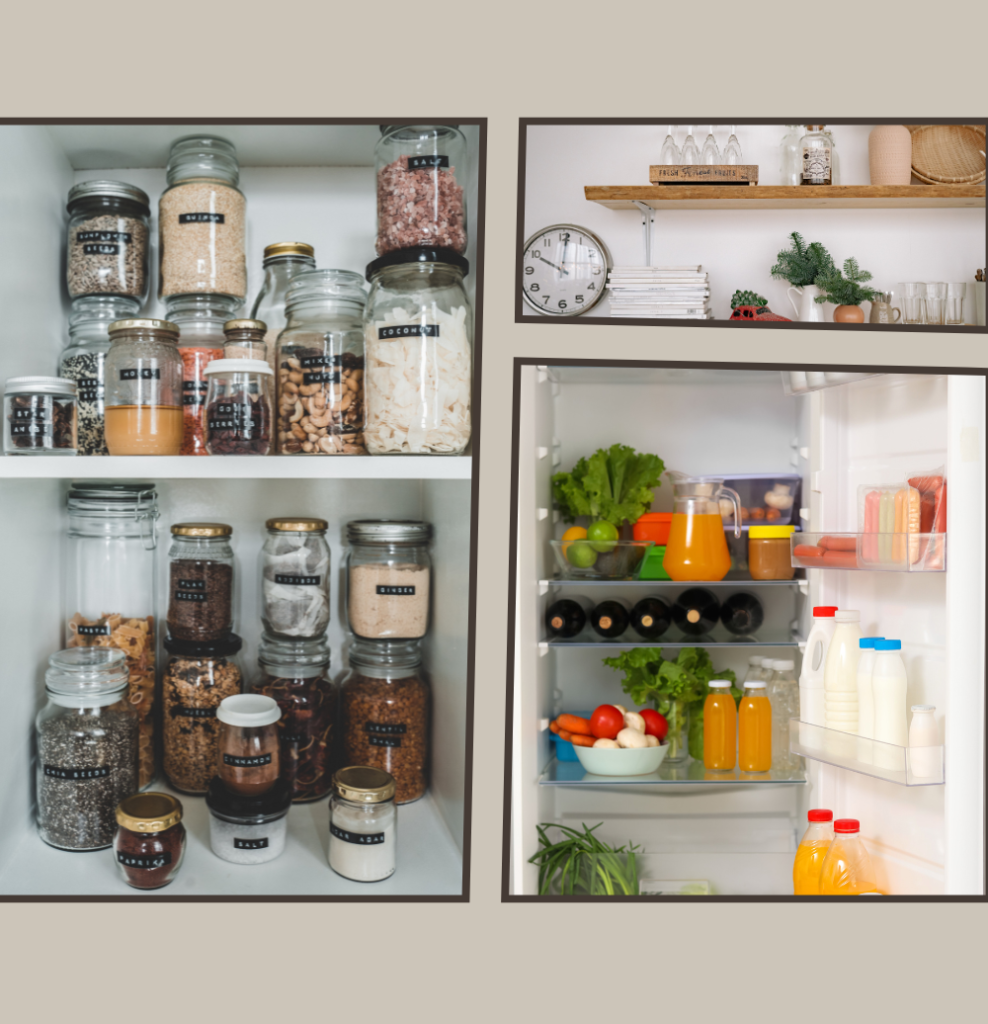
Once shelves are clear:
- Give them a quick wipe
- Group similar items together (baking, snacks, tins, pasta)
- Place everyday items at eye level
I do love a storage container or 10, but you don’t need fancy containers — simply being able to see what you have is the goal.
Step 2: The Fridge Clear-Out
The fridge is often where good intentions go to die.
Clear First, Then Clean
- Remove everything shelf by shelf
- Throw away anything expired, mouldy or questionable
- Wipe shelves and drawers before putting food back
Create Simple Fridge Zones
This doesn’t need to be complicated:
- One shelf for meals and leftovers
- One area for snacks
- One place for sauces and condiments
When everyone knows where things go, the fridge stays tidier for longer.
Step 3: Freezer Stock Take
The freezer is a goldmine — if you know what’s in it.

Take Stock
- Group items together (meals, meat, veg, bread)
- Discard anything freezer-burnt or unidentifiable
- Make a simple list of what’s left
You can keep this list on your phone or stuck inside a cupboard door. I find keeping it visible really helpful when it comes to meal planning.
Plan Before You Shop
Before your next food shop:
- Plan a few meals using freezer food
- Challenge yourself to use what you have first
This alone can save a surprising amount of money.
Using What You’ve Got (Without Getting Bored)
A kitchen reset often highlights half-used ingredients and forgotten staples.
Try:
- Building meals around one key ingredient
- Using recipe cards or saved recipes for inspiration
- Keeping a short list of “use me soon” items
- Search for recipes using some of those forgotten ingredients – That’s how I learnt about pear and candied ginger muffins.
Having visual reminders makes it far easier to avoid waste.
How a Kitchen Reset Supports the Rest of Your Spring Reset
Once the kitchen feels calmer:
- Meal planning takes less effort
- Food waste reduces naturally
- Grocery spending becomes more intentional
This reset links closely with your spring financial MOT, as food spending is often one of the easiest areas to improve without sacrificing enjoyment.
👉 Read next: Spring Financial MOT: How to Review Your Finances in One Afternoon
A spring kitchen reset doesn’t need to be perfect to be effective. A little space, a bit of clarity and a clear idea of what you already have can make everyday cooking feel much lighter.