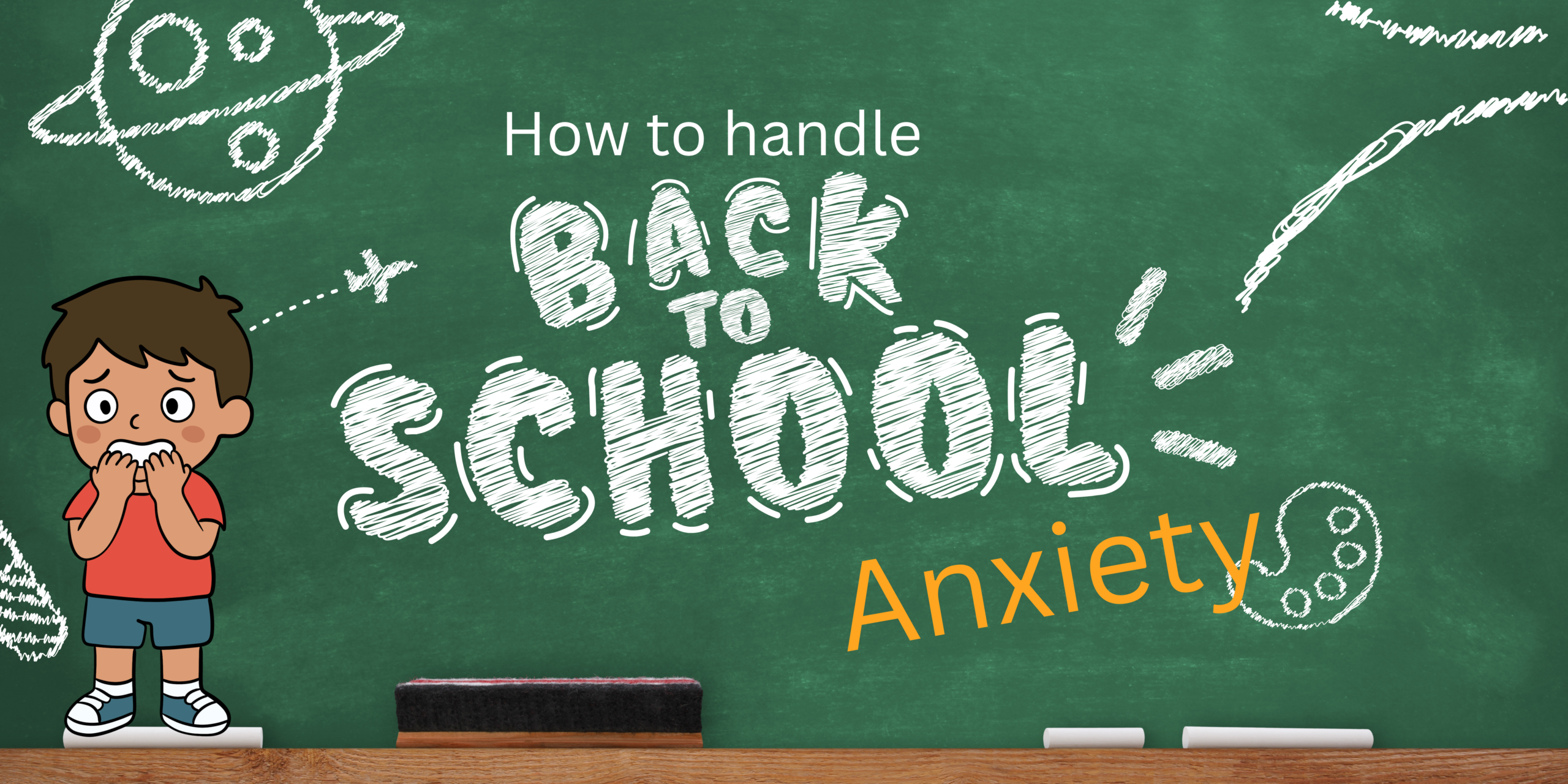
How to Handle Back to School Anxiety (For Kids & Parents)
As summer comes to an end, many families begin preparing for a new school year. While some children are excited to see friends and start new adventures, others may feel nervous, worried, or even scared about going back to school.
The good news is that back to school anxiety is incredibly common. Whether your child is starting school for the first time, moving to a new class, or transitioning to a new school, those nervous feelings are a normal part of facing something new.
In this guide, we’ll explore why back-to-school anxiety happens, the signs to look out for, and practical ways to help children feel more confident and prepared.
What Is Back to School Anxiety?
Back-to-school anxiety refers to feelings of worry, nervousness, or stress related to returning to school.
Children may feel anxious about meeting a new teacher, making friends or being separated from parents. Moving to a new school or starting a new school year can also mean learning new routines or worries about getting lost or not knowing what to expect. Some children may also worry about academic success and the pressure of keeping up.
Even children who generally enjoy school can experience anxiety at the start of a new school year.
Signs Your Child May Be Feeling Anxious
Children don’t always tell us when they’re worried. Instead, anxiety can show up in different ways.
Some common signs include:
- Clinginess or reluctance to separate
- Irritability or mood swings
- Trouble sleeping
- Complaints of tummy aches or headaches
- Asking repeated questions about school
- Avoiding conversations about returning to school
- Becoming unusually quiet or withdrawn
Remember that these behaviours are often a child’s way of communicating that they need reassurance and support.
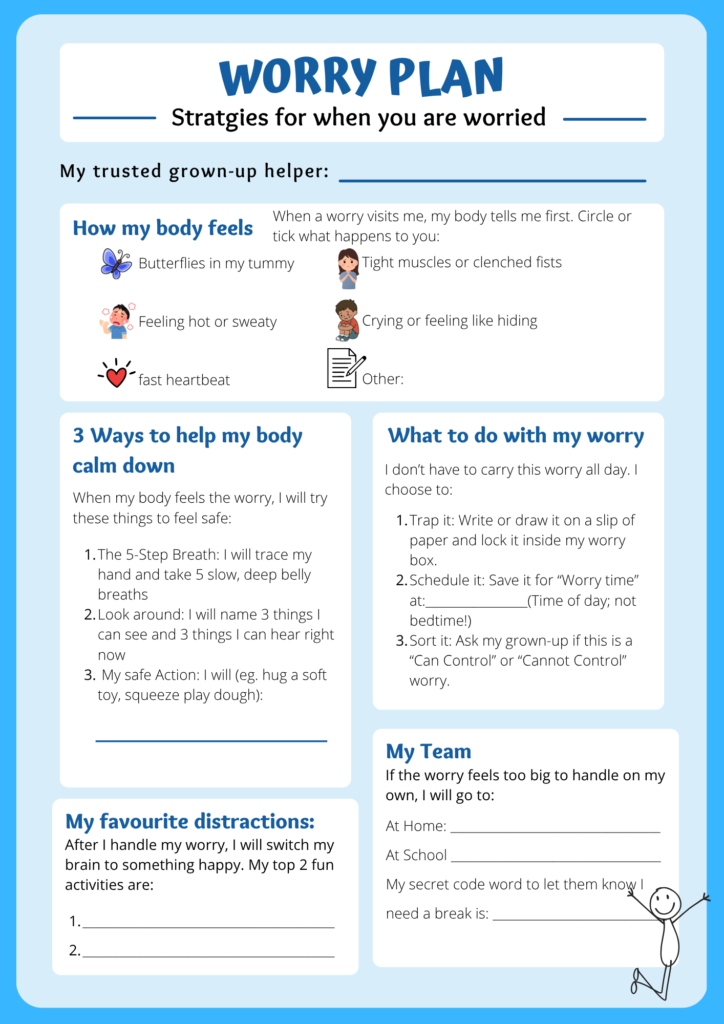
If your child is feeling worried about school, a Worry Plan can help them identify their concerns and think of practical ways to manage them.
Talk About Their Feelings
One of the best things you can do is create opportunities for your child to talk about how they’re feeling.
Try asking open-ended questions such as:
- What are you most excited about?
- Is there anything you’re worried about?
- What do you think your new classroom might be like?
- What are you looking forward to learning?
Listen carefully without rushing to solve every problem immediately. Sometimes children simply need to feel heard and understood.
Let Them Know Anxiety Is Normal
Children often believe they’re the only ones feeling nervous.
Remind them that many children feel worried before school starts. It is perfectly normal that new experiences feel scary at first, but it is important to know that nervous feelings often get smaller once we become familiar with something.
You may also want to point out that even adults sometimes feel nervous about new situations.
Normalising anxiety helps children understand that their feelings are not something to fear.
Focus on What They Can Expect
Uncertainty often fuels anxiety.
Help your child feel more prepared by discussing what their school day might look like. Talk them through the routine of where they will go when they arrive at school, who is going to be picking them up and what to expect from their school day. Talk about lunchtime routines and possible playtime activities that they can expect.
The more familiar school feels, the less overwhelming it can seem.
Visit the School If Possible
If your child’s school offers open days, transition sessions, or tours, take advantage of these opportunities.
Seeing the building, classroom, playground, and teachers beforehand can make the first day feel much less intimidating.
If a visit isn’t possible, look at photos on the school’s website or talk about what school might be like.
Read Books About Starting School
Books can be a wonderful way to explore worries and build confidence.
Stories help children see that other characters experience similar feelings and learn ways to cope with them.
I have included some great recommendations for books to help with starting school anxiety in my post about School Readiness.
Reading together also creates opportunities to discuss any concerns that arise naturally.
Practice School Routines Early
A sudden change in routine can make anxiety worse.
A week or two before school starts, begin practising with earlier bedtimes and morning wake-up times. Encourage your child to get dressed independently and help pack a bag for the day. Even activities such as eating lunch at a set time can help to reassure children.
These small changes help children feel more prepared and confident.
Create a Worry Plan Together
Sometimes children feel better when they have a simple plan for handling worries.
You might agree on strategies such as:
- Taking three deep breaths
- Talking to a teacher
- Thinking of a happy memory
- Carrying a small comfort item (if allowed)
- Using positive self-talk
Having a plan gives children a sense of control over situations that may feel overwhelming. To help you get started, I have written simple instructions including a free template you can use: How to create a worry plan for children
Make a Worry Monster Craft
Creative activities can help children express feelings they find difficult to put into words.
One fun idea is to make a Worry Monster.
Children can write or draw their worries and feed them to the monster through its mouth. This simple activity creates an opportunity to talk about concerns while helping children feel that their worries are being safely looked after.
You can find our step-by-step Worry Monster craft tutorial here.
Watch Your Own Anxiety
Parents naturally worry about big transitions too.
Children often take emotional cues from the adults around them, so try to speak positively about school and avoid sharing your own worries in front of them. Instead focus on exciting opportunities and who confidence in their ability to cope.
It’s perfectly normal to feel emotional about your child starting school, but projecting calm confidence can help them feel secure.
When to Seek Additional Support
Some anxiety is normal and usually settles once children adjust to their new routine.
However, if anxiety is significantly affecting your child’s sleep, eating habits, daily activities, or overall wellbeing, consider speaking with their teacher, school staff, or a healthcare professional for additional support.
Free School Anxiety Resource
Download our free Worry Plan template to help your child identify worries, explore solutions, and build confidence before the new school year begins. You can find tips on completing the plan together with your child on my blog post: How to create a Worry Plan for Children
Final Thoughts
Feeling nervous about school is a normal part of growing up. Whether your child is starting school for the first time or returning after the holidays, a little anxiety is often a sign that they care about what’s ahead.
By listening to their concerns, creating predictable routines, and helping them develop coping strategies, you can support your child in approaching the new school year with confidence.
Most importantly, remind them that they don’t have to be fearless to be brave. Sometimes bravery simply means showing up, even when something feels a little scary.